
WWII Landing Sites in Licata & Gela — Operation Husky 1943
The WWII Landing Sites Tour in Licata & Gela takes you to the exact places where the Allied forces came ashore on July 10, 1943, during Operation Husky — one of the largest amphibious invasions of the Second World War.
Along the southern coast of Sicily, American troops of the 1st Infantry Division, the 45th Infantry Division, and the 3rd Infantry Division faced rough seas, enemy fire, and the uncertainty of the first hours of the campaign that would eventually lead to the liberation of Italy.
Walking these beaches, exploring surviving bunkers, and visiting inland battle sites, you will experience the tension, courage, and human stories behind the invasion that changed the course of the war in the Mediterranean.
Led by a historian‑guide, this tour offers a clear, engaging, and deeply human narrative — connecting strategy, geography, and personal accounts from both sides of the conflict.
This WWII Landing Sites Tour in Licata and Gela explores the key locations of Operation Husky 1943, the Allied invasion of Sicily. The itinerary includes the American landing beaches of Gela, Mollarella, Poliscia, Falconara, surviving Italian and German bunkers, the Ponte Dirillo battlefield, and memorials dedicated to the soldiers of the U.S. 1st, 3rd, and 45th Infantry Divisions. It is ideal for history enthusiasts, military history travelers, and visitors interested in the strategic importance of Sicily during World War II.
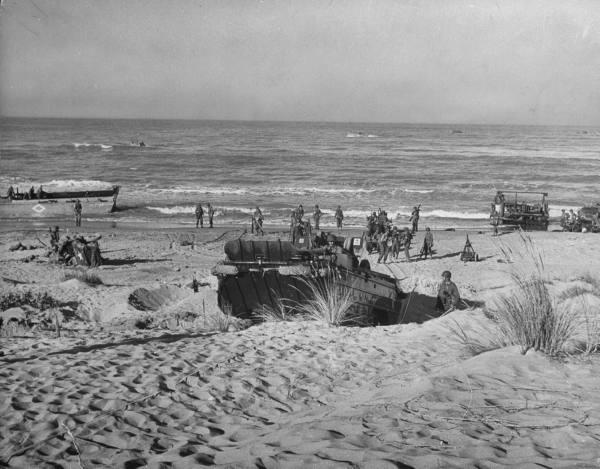
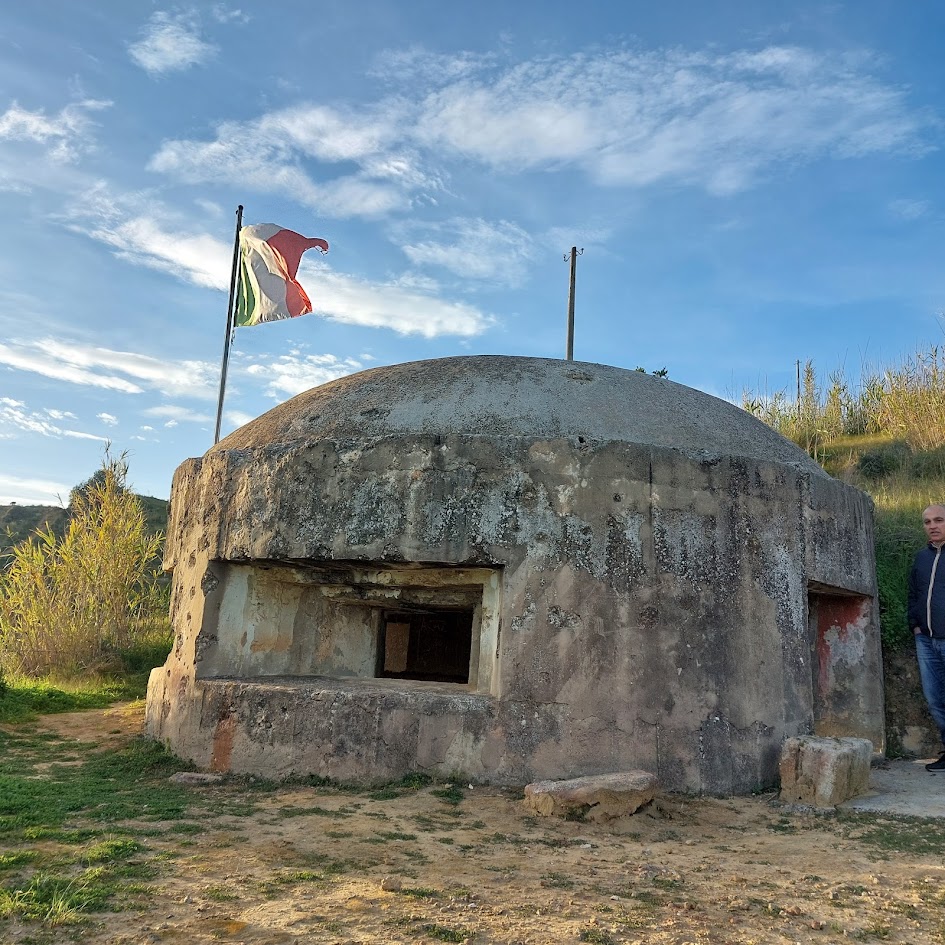
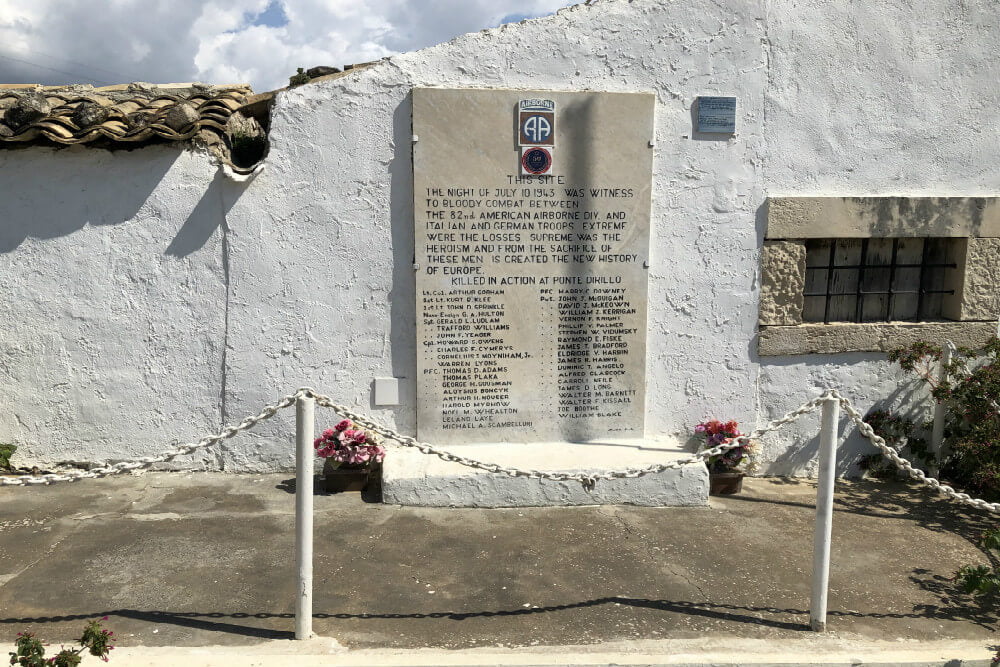
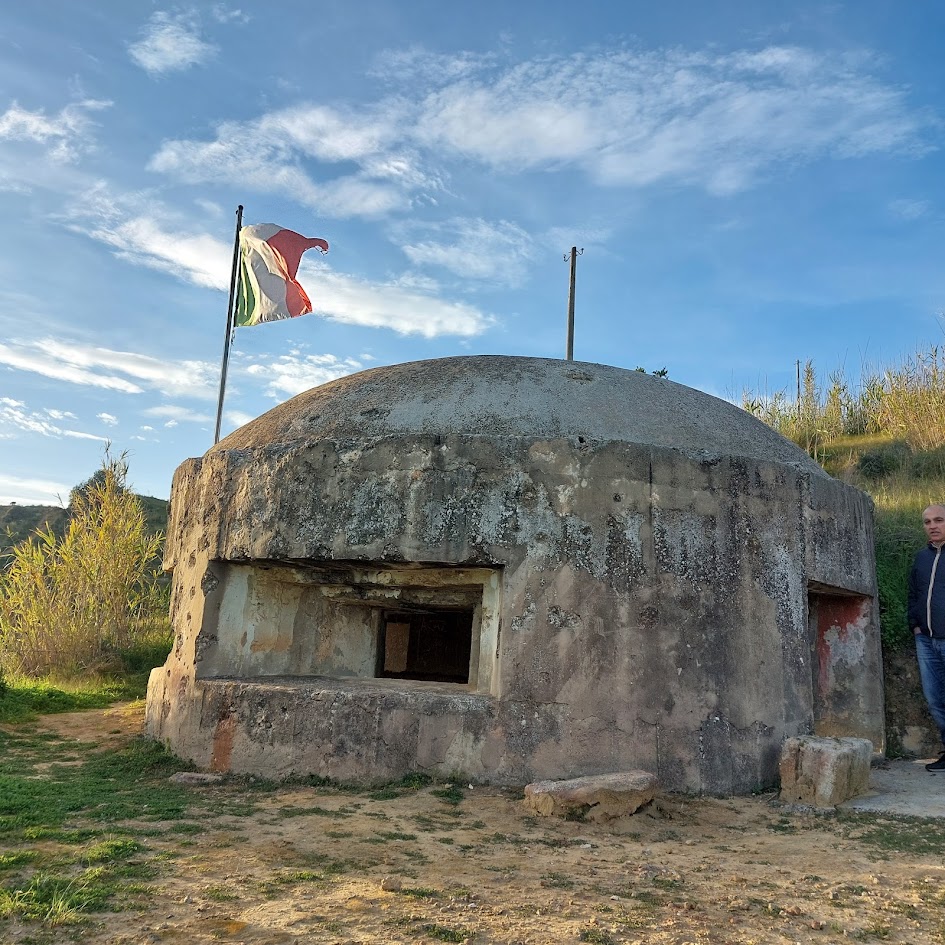
Operation Husky remembered through its places — the landing, the defenses, and the memorials of Licata and Gela.
Licata — The First Allied Beachhead in Italy (July 10, 1943)
Licata was the first city liberated by the Allies during Operation Husky, the invasion of Sicily on July 10, 1943. At dawn, the U.S. 3rd Infantry Division under General Lucian Truscott landed on the beaches of Mollarella, Poliscia, and Falconara, establishing the first stable beachhead in Italy.
The landing was challenged not only by Italian coastal defenses but also by rough seas that overturned landing craft and scattered assault waves. Despite this, American troops secured the beaches quickly and advanced toward the port, opening the way for reinforcements and supplies.
Today, Licata preserves several WWII bunkers, artillery positions, and observation points that allow us to reconstruct the first hours of the invasion with clarity and precision. From the panoramic viewpoint of Monte Sant’Angelo, where the first American flag was raised on Italian soil, the entire coastline of the landing is visible.
What we see in Licata
- • Mollarella landing beach — where the first waves came ashore
- • Italian coastal bunkers — still intact and visitable
- • Falconara Castle viewpoint — strategic observation point
- • Monte Sant’Angelo — view of the coastline
- • Licata Town Hall — first U.S. flag raised in Italy
- • Licata port — crucial for Allied logistics
In Licata, the tour focuses on the opening phase of Operation Husky: the landing, the first engagements, the securing of the port, and the rapid collapse of local defenses. We reconstruct the events using maps, period photos, and eyewitness accounts, connecting the geography of the coastline with the tactical decisions made by both sides.
Gela — The Hardest Fighting of Operation Husky (July 10–12, 1943)
If Licata represents the first successful Allied beachhead, Gela is where the invasion of Sicily was truly decided. Here, the U.S. 1st Infantry Division — the “Big Red One” — faced the most dramatic resistance of the entire southern front.
The landings at Gela, Macchitella, and Scoglitti were met with rough seas, scattered assault waves, and immediate counterattacks by Italian and German forces. For two days, the situation hung in the balance as American infantry, engineers, and Rangers fought to hold the beachhead against tanks, artillery, and coordinated assaults from inland.
Walking these beaches and inland roads today, the terrain still reveals the tactical challenges of those hours: open fields, dunes, ridgelines, and crucial road junctions that determined the outcome of the battle.
What we see in Gela
- • Gela landing beaches — where the Big Red One came ashore
- • Ranger positions at Ponte Dirillo — the stand that stopped the armored counterattack
- • Inland approach routes used by Italian and German forces
- • Macchitella sector — chaotic landings under fire
- • Gela Historical Museum — uniforms, weapons, documents, battlefield artifacts
In Gela, the tour shifts from the rapid success of Licata to the intense, hour‑by‑hour struggle that defined the invasion. We reconstruct the counterattacks of July 11, when Italian armored units and German mobile forces attempted to push the Americans back into the sea, following the actions of the U.S. Rangers, the 1st Infantry Division, and the naval gunfire support that ultimately saved the beachhead.
Together, Licata and Gela form a complete narrative arc: Licata shows how the Allies established their first foothold in Italy, while Gela reveals how close the invasion came to failure — and how it was saved.
WWII Landing Sites in Licata & Gela — Highlights
- • Licata landing beaches (Mollarella, Poliscia, Falconara)
- • Italian coastal bunkers and artillery positions
- • Monte Sant’Angelo and panoramic viewpoint
- • Gela landing beaches
- • Ponte Dirillo battlefield and Ranger positions
- • Inland routes used for Italian and German counterattacks
WWII Landing Sites in Licata & Gela — Itinerary
1) Licata Landing Beaches
We begin on the beaches where the U.S. 3rd Infantry Division came ashore under heavy surf. You will see the exact sectors, understand the naval approach, and learn how the first waves secured the beachhead and advanced toward the port.
2) Italian Coastal Defenses
We explore surviving bunkers, machine‑gun nests, and artillery positions built by the Italian Army to defend the coastline. Their architecture and placement reveal the defensive strategy of the time.
3) Monte Sant’Angelo Memorial
From this panoramic viewpoint above Licata, we see the entire landing area and recall the raising of the first American flag on Italian soil, reflecting on the human cost of the operation.
4) Gela Landing Beaches
We move east to the beaches of Gela, where the U.S. 1st Infantry Division faced stronger resistance. Here we reconstruct the landings and the first counterattacks, hour by hour.
5) Ponte Dirillo and Inland Battlefields
At Ponte Dirillo, we follow the actions of the U.S. Rangers who held the bridge against Italian armored units. The terrain still shows why this position was so critical for both sides.
6) Gela Historical Museum (optional)
Time permitting, we conclude with a visit to the museum, where uniforms, weapons, documents, and artifacts recovered from the battlefield provide a tangible connection to the stories told on the ground.
Tour Details
- Duration: 4–6 hours
- Transport: Private car or minivan
- Guide: Licensed historian
- Languages: English, Italian
- Price: €350 (private tour)
- Starting point: To be agreed (Licata or Gela area)
Why this WWII tour
This is not a generic WWII tour — it is a reconstruction of the first 24–48 hours of Operation Husky, told on the ground, step by step, where everything happened.
You will understand the invasion from the perspective of soldiers, commanders, and civilians, with a narrative that blends military history, geography, and human stories. Licata and Gela together offer a complete, balanced view of the Allied landings in southern Sicily.
FAQ
Is this tour suitable for people with limited historical knowledge?
Yes. The tour is designed to be clear and accessible, with maps and visual aids that make the events easy to follow.
Is the tour emotionally intense?
We deal with wartime events and casualties with respect and balance, focusing on understanding rather than spectacle.
Can the itinerary be customized?
Yes — we can adapt the route and duration based on your interests, time, and starting location.
Is this tour suitable for children or teenagers?
For teenagers with an interest in history, it can be very meaningful. For younger children, we can simplify the narrative.